

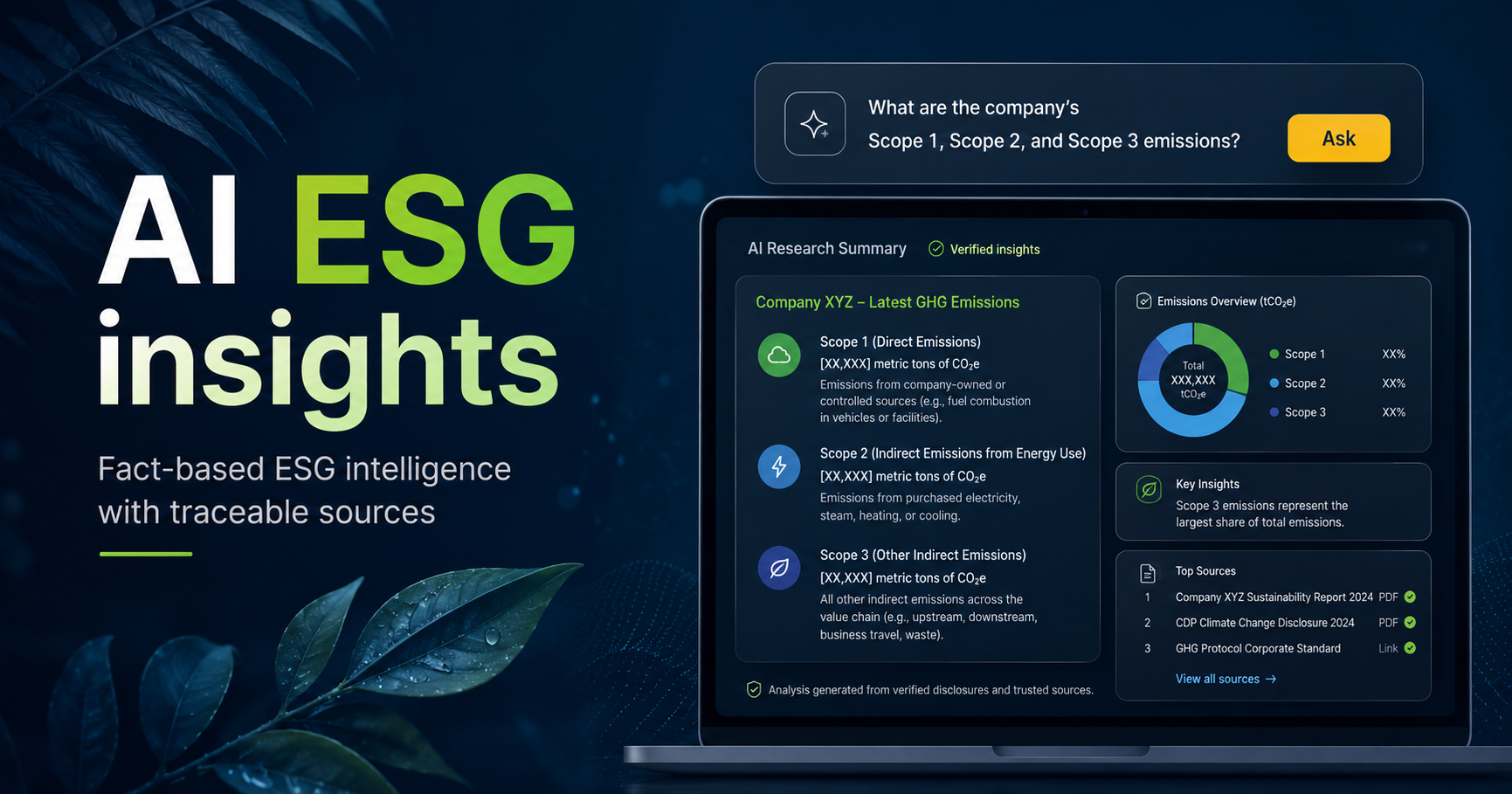
Businesses today operate in an environment where transparency, accountability, and measurable sustainability outcomes are becoming essential for long-term success. Investors, regulators, and consumers increasingly expect organizations to provide reliable information about environmental impact, governance standards, operational ethics, and social responsibility. As reporting requirements continue to evolve, ESG data analysis has become a critical component of modern corporate strategy.
Table of Contents
Organizations generate massive volumes of operational information across departments, supply chains, compliance systems, and governance frameworks. Without centralized intelligence, this data often becomes fragmented, inconsistent, and difficult to validate. Advanced sustainability reporting systems help transform raw information into structured insights that support accurate reporting and better decision-making.
Why Traceable Reporting Matters
Corporate sustainability reporting is no longer limited to annual disclosures or brand positioning. Businesses are now expected to demonstrate measurable progress supported by transparent operational data. Traceable reporting creates a clear connection between business activities and sustainability outcomes, helping organizations improve accountability and stakeholder confidence.
Companies that rely on outdated reporting processes frequently encounter inconsistencies, delayed disclosures, and compliance challenges. Modern reporting ecosystems simplify ESG data analysis collection and improve reliability through automation, centralized storage, and real-time validation.
The Need for Data Accuracy
Reliable reporting depends on high-quality operational data. Inaccurate or disconnected datasets can weaken investor trust and create compliance risks. Intelligent systems standardize reporting structures, reduce manual errors, and improve consistency across multiple departments.
Organizations that invest in centralized sustainability intelligence often gain stronger visibility into operational performance while improving long-term planning capabilities.
The Growing Role of AI in Sustainability Intelligence
Artificial intelligence has significantly transformed corporate reporting processes. AI-enhanced ESG analytics enables organizations to process large datasets efficiently while identifying patterns, inconsistencies, and operational risks that may otherwise go unnoticed.
Traditional reporting systems often require extensive manual effort, slowing down data analysis and increasing the risk of inaccuracies. AI-powered platforms streamline this process by automating data aggregation, validation, and performance tracking across operational networks. ESGDS’ AI platform slashes data processing time by 98% with MongoDB Atlas, helping enterprises improve reporting speed, maintain data integrity, and strengthen operational transparency.
Smarter Intelligence for Better Decisions
Modern analytics platforms support strategic decision-making by converting operational data into measurable insights. Businesses can monitor resource consumption, governance performance, emissions trends, and compliance indicators in real time. ESG Insights for Consultants have become increasingly important as advisory firms and sustainability professionals require accurate reporting intelligence to guide organizations through evolving frameworks and disclosure standards. Advanced dashboards improve benchmarking capabilities while supporting measurable business improvements.
Strengthening Corporate Transparency Through Data
Transparent reporting frameworks help organizations build credibility with investors, customers, and regulatory authorities. Businesses that maintain clear sustainability records are often better positioned to manage reputational risks and strengthen stakeholder trust.
Centralized reporting systems improve visibility across enterprise operations by integrating information from multiple departments into a unified platform. This approach simplifies audits, supports compliance processes, and improves reporting consistency.
Organizations adopting data-driven sustainability systems can also identify inefficiencies more effectively, helping leadership teams implement targeted operational improvements.
Managing Operational Challenges with Predictive Intelligence
Corporate sustainability challenges extend beyond environmental reporting. Governance issues, supplier disruptions, labor concerns, and compliance failures can all impact long-term performance. ESG Risk assessment helps organizations identify vulnerabilities before they become larger operational or financial problems.
Predictive intelligence systems evaluate operational patterns, supplier behavior, governance indicators, and compliance trends to detect potential risks early. Businesses can then implement corrective actions supported by measurable insights rather than assumptions.
This proactive approach strengthens operational resilience while improving transparency across enterprise activities. Investors increasingly favor organizations that demonstrate clear risk management strategies and measurable accountability standards.
Long-Term Value Through Intelligent Reporting
Sustainability reporting is now closely connected to business resilience and strategic growth. Organizations that invest in advanced reporting technologies gain stronger operational visibility while improving decision-making across departments.
Data-driven intelligence supports continuous improvement by helping businesses monitor performance trends, measure progress against sustainability goals, and identify opportunities for operational efficiency.
Companies that prioritize transparency and accountability are often better prepared to adapt to changing regulations, investor expectations, and market conditions.

Conclusion
The future of corporate sustainability depends on transparent, traceable, and intelligent reporting systems. Businesses must move beyond fragmented reporting processes and adopt advanced technologies capable of delivering accurate, measurable insights.
By integrating automation, predictive intelligence, and centralized reporting ecosystems, organizations can improve accountability, strengthen stakeholder confidence, and support long-term operational success. Companies that embrace modern sustainability intelligence systems will be better positioned to navigate evolving reporting standards while maintaining a competitive advantage.
Looking to simplify sustainability reporting and improve operational transparency? Discover advanced reporting solutions designed to enhance traceability, strengthen compliance, and support smarter business decisions through intelligent analytics. Businesses seeking ESG Insights for Consultants can connect through the company’s verified business location for direct consultation and sustainability reporting support.
FAQs
What is traceable sustainability reporting?
Traceable reporting connects sustainability disclosures directly to verified operational data, improving transparency and accountability.
Why is AI important for modern reporting systems?
Artificial intelligence automates data processing, improves reporting accuracy, and helps organizations identify operational trends and risks faster.
How does ESG Risk assessment benefit organizations?
It helps businesses identify compliance issues, governance challenges, and operational vulnerabilities before they impact performance.
Why are centralized reporting systems important?
Centralized systems improve data consistency, reduce reporting errors, and simplify compliance management across departments.
How do consultants use sustainability intelligence platforms?
Consultants rely on reporting dashboards and analytics tools to benchmark performance, guide compliance strategies, and recommend measurable improvements.


About the Author


